Choosing the right Frosted Glass Front Door involves more than matching a stylish panel to your exterior walls. The door must balance privacy, daylight, security, insulation, maintenance, and everyday comfort. A soft morning glow may look beautiful, yet strong afternoon sun can expose fingerprints, fade nearby flooring, or make the entryway uncomfortably warm.
Charles Eames, a respected American designer and architect, offered a useful principle: “The details are not the details. They make the design.” His words apply directly to frosted glass entrances. The glass pattern, frosting level, frame material, hinge quality, lockset, and threshold can change how the door performs. A lightly etched surface may preserve more daylight, while a dense pattern can create stronger privacy beside a busy sidewalk. Consider the view from both sides.
Think about your actual routine. Do children touch the glass with muddy hands? Does rain strike the doorway sideways? Will the door face a streetlight at night? These small details matter. Very much.
Energy performance also deserves attention. Look for insulated glass, suitable weather seals, and a frame designed for your climate. Check the manufacturer’s tested ratings rather than trusting attractive product language. Local installation requirements should be confirmed with a qualified professional.
There is no perfect door. A design that looks elegant in a showroom may feel dark, noisy, or difficult to clean at home. This guide will help you compare materials, glass textures, privacy levels, hardware, and installation choices with clearer judgment.
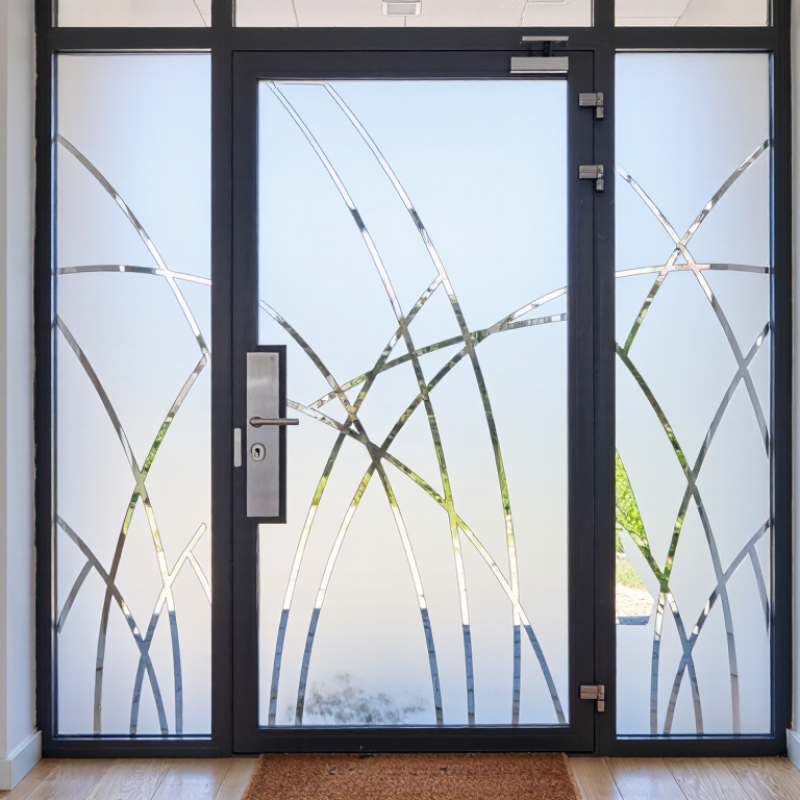
Choosing a frosted glass front door starts with your privacy needs, not its appearance. A heavily etched panel blurs faces and furniture clearly, while lightly frosted glass still allows useful daylight. The U.S. Department of Energy reports that windows can represent 25–30% of residential heating and cooling energy use. Therefore, ask for insulated glazing and a low-emissivity coating, especially in homes facing strong afternoon sun. A beautiful door can still create uncomfortable heat.
Light quality also matters. A north-facing entrance may benefit from clearer frosting, because it receives softer illumination. South- or west-facing doors usually need stronger diffusion and solar control. The Illuminating Engineering Society recommends evaluating glare, contrast, and visual comfort rather than judging brightness alone. In practical terms, stand inside the entryway at noon. Check whether the floor looks bright, dull, or sharply striped. This small test is more useful than a showroom sample. Style should support the architecture: fine patterns suit restrained façades, while geometric textures can echo metal railings or paving lines. I would avoid choosing a pattern only because it photographs well.
Tips: Compare samples outdoors, morning and evening. Ask about privacy after dark, when interior lights reveal silhouettes. Confirm the glass safety rating and door energy-performance information with a qualified installer. The National Fenestration Rating Council explains that certified ratings make products easier to compare. Still, ratings cannot predict every hallway, shadow, or personal preference. That uncertainty deserves attention.
Choosing a frosted glass front door starts with visibility, not appearance. Acid-etched glass offers a smooth, permanent haze. Sandblasted glass feels softer, but its texture may collect dust and fingerprints. Patterned glass creates stronger distortion and often provides more privacy near eye level.
Transparency should be checked through visible transmittance, or VT. Low-VT glass admits less daylight. Medium-VT glass keeps faces indistinct while brightening a narrow entryway. High-VT glass feels open, but silhouettes may remain visible at night. Ask for physical samples. A showroom sample can mislead you.
Laminated frosted glass adds a translucent interlayer between two panes. It can improve safety and reduce sound transfer, though it may look slightly milky. The National Fenestration Rating Council identifies VT, U-factor, and SHGC as key performance values for rated fenestration products. Compare these values, not just the privacy label. The U.S. Department of Energy reports that windows and doors can influence roughly 25% to 30% of household heating and cooling energy use. A thermally improved door matters in exposed entrances.
Test the glass from both sides. Check it at noon and after sunset. A light behind you can reveal more than expected. I once preferred a heavily frosted sample, then found the entryway too dark on a cloudy day. Privacy is useful. So is daylight.
Choosing a frosted glass front door starts with the door’s full material system, not its attractive surface. Fiberglass usually resists moisture and dents better than many wood doors. Steel offers strong structural performance, but exposed edges can rust if coatings fail. Wood feels warm and authentic, yet it needs careful sealing around the threshold and glass frame.
Look beyond the glass pattern. The U.S. Department of Energy reports that windows can cause 25–30% of household heating and cooling energy use. A poorly sealed glazed door can create similar comfort problems near the entrance. Check the NFRC label for U-factor and solar heat gain coefficient. Lower U-factor means better insulation. Lower solar heat gain can reduce unwanted summer heat. ENERGY STAR estimates that certified window replacements may reduce household energy bills by 7–15%, although actual door savings depend on climate, installation, and household use.
Security needs equal attention. Select laminated or impact-rated glass, a reinforced frame, a multi-point lock, and protected hinges. ASTM F1233 testing can help compare resistance to forced-entry conditions, but ratings are not identical across products. Frosted glass improves privacy, not physical security. Check the lock area closely. Gaps, weak strike plates, and loose threshold screws can undermine expensive glazing. I would not trust decorative film alone. Confirm the glass specification, frame anchoring, weather seals, and installer credentials before ordering. Small installation errors remain easy to overlook.
Choosing a frosted glass front door starts with your home’s architecture, not a catalog image. A door should belong to the building before it attracts attention. In a traditional house, consider divided panels, warm timber tones, and softly patterned glass. These details echo brick, stone, or pitched roofs without copying every feature. For a modern home, a broad glass panel, slim frame, and clean hardware create a quieter transition. Frosted glass also softens strong daylight while improving everyday privacy.
Look closely at proportion. A narrow entrance can feel cramped behind heavy rails, while a wide façade may make a small door seem lost. Measure the opening, observe nearby windows, and compare the door’s vertical lines with the home’s strongest shapes. Geometric frosting suits angular architecture. Organic textures can balance curved porches or natural materials. Samples viewed indoors may look different beside exterior stone and afternoon shadows. Test them there, not only online.
Color deserves restraint. Black frames can sharpen contemporary façades, but they may overpower pale cottages. Muted bronze, white, or natural wood effects can connect the entrance with existing trim. Security hardware, weather seals, and suitable glass should meet local building requirements. Appearance cannot replace performance. It is easy to favor a dramatic pattern that looks impressive alone, yet competes with an ornate canopy. A simpler design may serve the house better. The right choice can feel almost ordinary. That may be harmony.
How to Choose the Right Frosted Glass Front Door?
Accurate measurements should guide every frosted glass front door decision. Measure the opening width at the top, middle, and bottom. Record the smallest measurement. Measure height from the finished floor, not the unfinished subfloor. Check the wall depth, frame condition, threshold, and available swing clearance. Do not assume an old frame is square. I once trusted a single measurement, and the replacement door needed unexpected adjustments. That mistake taught me to photograph each corner and note uneven surfaces before ordering.
Installation needs depend on the existing structure. A replacement slab may suit a sound frame, while a prehung door can solve alignment problems. Confirm whether the entry requires new hinges, weather seals, trim, or threshold work. The floor may slope slightly, affecting the door’s closing action. Ask the installer how the frosted glass panel will be supported and sealed. Proper shimming matters. Poor alignment can cause drafts, rubbing, or lock failure.
Plan maintenance before choosing the finish and glass texture. Clean the glass with a soft cloth and a mild solution. Avoid abrasive pads, especially on textured frosting. Inspect weather seals after heavy rain and seasonal temperature changes. Check hinges and the lock for stiffness every few months. In coastal or damp areas, metal hardware may need more frequent cleaning. Privacy can also change at night when interior lights are on. I still find this detail easy to overlook. A small sample viewed indoors and outdoors can reveal more than a product photograph.
| Decision Area | What to Check | Practical Guidance | Recommended Action |
|---|---|---|---|
| Door Opening Measurements | Measure the rough opening, not only the existing slab. | Record width at the top, middle, and bottom; height at both sides and the center; and the wall thickness. The smallest width and height measurements help identify fitting limitations. | Take measurements in at least three locations. |
| Door Slab Size | Confirm the replacement slab dimensions and handing. | Common residential entry-door slab widths include approximately 30, 32, and 36 inches, while 80 inches is a common height. Actual availability varies, so verify the selected door before ordering. | Match width, height, swing, and hinge side. |
| Sill and Threshold | Inspect the threshold height, slope, and drainage path. | A properly supported, weather-resistant sill helps limit water entry. Check that the threshold will not create a trip hazard or interfere with flooring and accessibility requirements. | Confirm sill details with the installer. |
| Glass Privacy Level | Choose the appropriate degree of obscurity. | Lightly textured or satin-finished glass generally admits more light and provides less privacy than heavily textured or opaque glass. View samples in daylight before selecting. | Compare samples from both sides. |
| Glass Safety | Verify that the glazing is suitable for a door. | Door glazing should use safety glass, typically tempered or laminated glass, in accordance with applicable local building requirements. Safety glass is designed to reduce injury risk if broken. | Request compliance documentation. |
| Energy Performance | Review glass, frame, and weather-seal performance together. | Look for published thermal-performance information such as U-factor and air-leakage data where available. Lower U-factor generally indicates better insulation, but the complete door assembly also matters. | Compare complete-unit specifications. |
| Installation Condition | Assess the frame, surrounding wall, and subfloor. | Rot, moisture damage, uneven openings, or structural movement may require repair before installation. A new door cannot compensate for a damaged or poorly aligned opening. | Inspect before final pricing. |
| Hardware Compatibility | Confirm lock, handle, hinge, and closer requirements. | Check bore locations, backset, hinge spacing, handing, and clearance for the chosen hardware. Smart locks and multipoint systems may require specific door preparation. | Provide hardware details early. |
| Weather Protection | Consider exposure to rain, wind, and direct sunlight. | Exterior doors need continuous perimeter weatherstripping, a correctly sealed frame, and suitable overhang or drainage conditions. High-exposure openings may need enhanced weather-resistant installation. | Review site exposure and flashing. |
| Cleaning Routine | Use products compatible with frosted glass and finishes. | Remove dust with a soft cloth, then clean with mild soap and water or a non-abrasive glass cleaner. Avoid scouring pads, abrasive powders, harsh solvents, and scraping tools that can damage the surface. | Clean as needed with soft materials. |
| Seal and Hardware Maintenance | Inspect seals, hinges, locks, and the threshold. | Check weatherstripping for compression or cracking, keep drainage channels clear, tighten loose hardware, and lubricate compatible moving parts according to the hardware instructions. | Inspect at least twice a year. |
| Long-Term Service Plan | Plan for replacement parts and periodic adjustments. | Keep installation records, glass specifications, hardware information, and care instructions. Address drafts, water intrusion, sticking, or cracked seals promptly to prevent larger repairs. | Maintain records and schedule checks. |
Note: Dimensions, safety requirements, energy ratings, and installation practices can vary by location and door system. Confirm final specifications with the installation professional and applicable local building codes.
*The content on this website is for general informational purposes only and should not be taken as medical advice. Please contact your physician or therapist to learn what therapy solution is suitable for your specific needs. Not all products, features, or indications shown are approved in all countries.