Choosing the right Adhesive Electrode Pads requires more than comparing prices or counting pieces per pack. Global buyers need dependable contact, stable conductivity, skin comfort, and consistent manufacturing quality. A pad may look identical to another, yet perform differently after several minutes of movement, sweat, or repeated application. Dr. John G. Webster, a respected authority in biomedical instrumentation, captures this concern clearly: “A dependable signal starts with dependable skin contact.”
This guide examines the details that influence real purchasing decisions. We consider hydrogel performance, electrode materials, connector compatibility, backing flexibility, packaging, shelf life, and traceability. Buyers should also review manufacturer quality systems and available documentation, including material declarations and relevant conformity evidence. Regional requirements can differ. One certificate does not automatically satisfy every market.
Practical testing still matters. Press a sample pad onto clean skin. Check whether its edges lift during movement. Notice the signal quality, residue, and comfort after removal. Small details matter. A low-cost product can become expensive when replacements, complaints, or interrupted treatment increase. However, premium pricing alone proves little. That assumption is too simple.
Some comparisons remain imperfect because suppliers disclose different test methods. Results may not be directly equivalent. This guide acknowledges that limitation instead of hiding it. Our aim is to help distributors, clinics, equipment manufacturers, and procurement teams make informed choices. The strongest option is not always the most advanced pad. It is the one that performs reliably for its intended device, user, environment, and market.
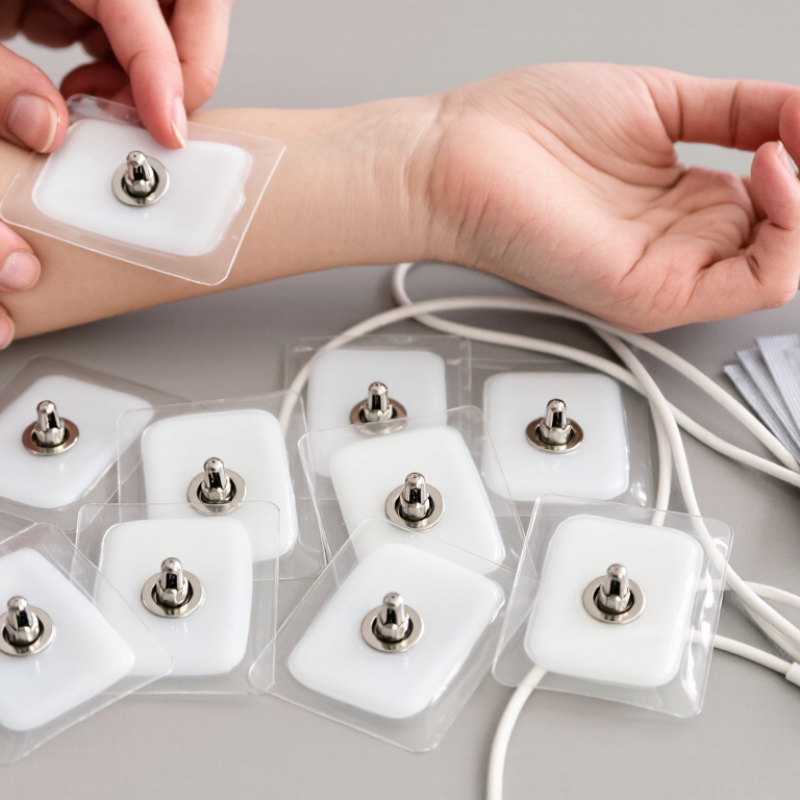
Adhesive electrode pads are small conductive patches used with TENS, EMS, and other electrotherapy devices. Each pad combines a flexible backing with a conductive gel layer. The gel helps electrical signals pass evenly from the device to the skin. When connected, the device sends controlled pulses through the pad and into nearby nerves or muscles. These pulses may reduce discomfort or support muscle stimulation, depending on the selected program. The sensation should feel noticeable, not sharply painful. Placement matters greatly.
In practical use, clean, dry skin improves adhesion and signal quality. Avoid applying pads over broken skin, irritated areas, or areas with reduced sensation. Many pads are reusable, but their gel gradually loses moisture and grip. A pad that lifts at the edges may create uneven stimulation. People with implanted electronic devices, pregnancy concerns, or unexplained pain should seek qualified medical advice before use. Product instructions remain important, even for experienced users.
Tips: Store pads in their sealed pouch and press them flat after application. Do not stretch the pad while attaching it. Rotate placement slightly between sessions to reduce skin irritation. Check the skin after removal. A mild red mark can occur, but persistent burning or swelling needs attention. I have found that users often increase intensity too quickly; slower adjustments usually make the experience easier to assess.
Adhesive electrode pads are single-use or reusable conductive interfaces placed on the skin to deliver electrical stimulation or detect electrical signals. They generally combine a conductive layer, an adhesive skin-contact layer, a backing material, and a connector or lead interface.
| Electrode Pad Category | Primary Function | Common Conductive Material | Typical Shape and Size Range | Typical Applications | Key Purchasing Considerations |
|---|---|---|---|---|---|
| Reusable TENS/EMS Pads | Deliver low-voltage electrical pulses through the skin for transcutaneous nerve or muscle stimulation. | Carbon film, conductive polymer, or metalized conductive fabric. | Usually rectangular, square, oval, or round; commonly about 3–10 cm per side or diameter. | Portable TENS and EMS devices, physiotherapy, sports recovery, and muscle stimulation. | Gel reusability, connector compatibility, skin adhesion, current distribution, and storage instructions. |
| Single-Use ECG/EKG Electrodes | Detect bioelectric signals generated by the heart for electrocardiographic monitoring. | Silver/silver-chloride sensing element with hydrogel or solid gel. | Commonly round or oval; adult monitoring sizes are often approximately 3–5 cm in diameter, depending on design. | Resting ECG, bedside monitoring, stress testing, ambulatory monitoring, and emergency care. | Signal quality, low skin impedance, radiolucency when required, connector type, biocompatibility, and expiry date. |
| EMG Surface Electrodes | Capture electrical activity produced by skeletal muscles without inserting a needle. | Ag/AgCl, conductive polymer, or conductive fabric. | Small circular or rectangular formats; size is selected according to the muscle and measurement protocol. | Muscle research, rehabilitation assessment, ergonomics, sports science, and biofeedback. | Stable baseline, low motion artifact, electrode spacing, cable shielding, and compatibility with the EMG acquisition system. |
| Defibrillation and Pacing Pads | Transfer high-energy defibrillation pulses or pacing current between a medical device and the patient. | Large-area conductive adhesive system, commonly using conductive gel and a metal or carbon-based electrode layer. | Large rectangular or rounded-rectangle pads; adult sets typically use broad chest-contact areas. | Manual defibrillators, automated external defibrillators, synchronized cardioversion, and transcutaneous pacing. | Device compatibility, energy rating, cable connection, shelf life, radiolucency, and compliance with applicable medical-device requirements. |
| Grounding and Reference Electrodes | Provide a reference or return path that helps complete the electrical circuit and reduce measurement interference. | Conductive rubber, carbon film, metalized fabric, or Ag/AgCl materials. | Available in small to large rectangular, circular, or oval formats. | Electrotherapy systems, physiological recording, laboratory instrumentation, and electrical safety setups. | Electrical resistance, surface contact area, cable or snap interface, flexibility, and compatibility with the equipment. |
| Hydrogel Adhesive Pads | Maintain skin contact while providing an ionically conductive interface between the skin and electrode. | Water-based polymer hydrogel, often combined with carbon, silver/silver-chloride, or another conductive layer. | Round, oval, square, and custom die-cut designs; dimensions depend on the application and target body area. | ECG monitoring, TENS, EMS, biofeedback, and other skin-contact electrical devices. | Hydration retention, peel strength, residue, skin comfort, drying resistance, and sealed packaging. |
| Dry Electrode Pads | Measure or transmit electrical signals without requiring a separate wet gel application. | Conductive textile, conductive silicone, carbon, stainless steel, or plated metal. | Flexible patches, textile panels, or compact rigid-contact designs. | Wearable sensors, long-duration monitoring, smart garments, fitness devices, and reusable research systems. | Contact stability, pressure dependence, motion artifact, washability, corrosion resistance, and reusable-life testing. |
| Specialty and Custom Electrode Pads | Support application-specific stimulation, sensing, or anatomical placement requirements. | Material selected according to conductivity, flexibility, biocompatibility, and manufacturing requirements. | Custom geometry, multi-zone layouts, thin-film patterns, or anatomically shaped pads. | Clinical research, wearable electronics, rehabilitation equipment, monitoring prototypes, and OEM medical devices. | Drawing approval, tolerances, adhesive validation, electrical testing, packaging, sterilization requirements, and regulatory documentation. |
| Operating Step | Description |
|---|---|
| 1. Skin Contact | The adhesive layer holds the pad against clean, dry skin and helps maintain a consistent contact area. |
| 2. Conductive Interface | Gel, conductive polymer, fabric, carbon, or metal transfers electrical charge between the skin and the connected device. |
| 3. Signal Transmission | For stimulation, the device sends controlled electrical pulses through the pads. For monitoring, the pads detect small bioelectric signals and transmit them to the recording equipment. |
| 4. Circuit Completion | A pair or set of electrodes forms the required electrical pathway, with pad placement affecting current distribution and measurement quality. |
| 5. Removal and Storage | Reusable pads should be covered and stored according to the manufacturer’s instructions; single-use pads should be discarded after use and not shared between users. |
Buyer note: Exact dimensions, connector formats, adhesive performance, electrical specifications, shelf life, and applicable certifications vary by product design and intended use. Buyers should verify technical drawings, test reports, biocompatibility information, packaging requirements, and market-specific regulatory documentation before purchase.