Top 10 Benefits of UHF RFID Textile Solutions for Businesses?
In today's competitive landscape, businesses are increasingly embracing uhf rfid textile solutions to enhance their operations. According to a report by Allied Market Research, the global RFID market is projected to reach $40 billion by 2026, with UHF RFID accounting for a significant share. This technology provides real-time tracking and inventory management capabilities, reshaping how companies handle their textile assets.
UHF RFID textile solutions offer distinct advantages, such as reducing inventory inaccuracies and improving supply chain efficiency. A study from GS1 highlights that organizations adopting RFID can achieve inventory accuracy rates of 95% or higher. This reliability directly translates into cost savings and improved customer satisfaction. However, some organizations struggle with implementation challenges and integration costs, reflecting the need for careful planning and evaluation of resources before adopting this technology.
Despite the occasional hurdles, UHF RFID textile systems are changing the textile industry. Businesses are increasingly aware of the potential benefits, including enhanced visibility and streamlined operations. As this technology continues to evolve, companies must stay informed to leverage its full potential. Engaging with UHF RFID textile solutions can be a transformative step for those ready to invest.
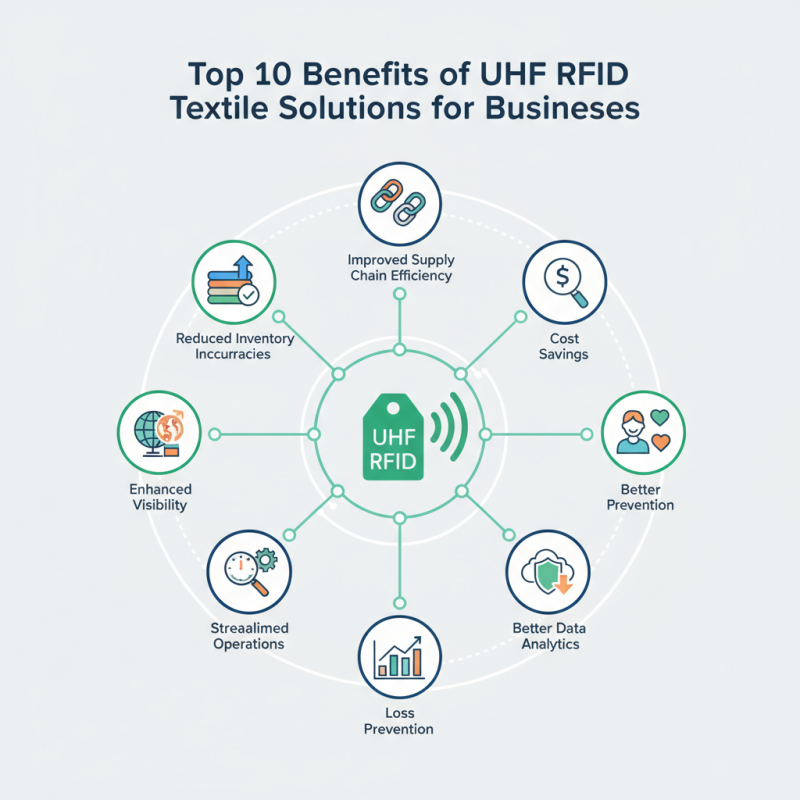
Key Features of UHF RFID Technology in Textile Management
UHF RFID technology is revolutionizing textile management. This system enhances inventory accuracy significantly. It automates tracking and reduces human errors. With UHF RFID tags, businesses can monitor textiles in real time. The ability to read multiple tags simultaneously improves efficiency.
One key feature is the long read range. UHF RFID can operate from several meters away. This means no need for close inspections. Handling large quantities of textiles becomes easier. Additionally, the durability of UHF RFID tags stands out. They withstand harsh environments and repeated handling, ensuring longevity.
Another aspect to consider is data collection. UHF RFID generates comprehensive data on textile usage. However, managing this data requires skilled personnel. Some companies may find it overwhelming initially. Continuous training and adaptation are crucial for success. Doing so can maximize the technology's potential while minimizing errors and inefficiencies.
Enhanced Inventory Accuracy Through UHF RFID Solutions
Enhanced inventory accuracy can significantly transform business operations. UHF RFID technology provides real-time tracking of textile products. A recent report from Tracksys revealed that businesses implementing UHF RFID solutions saw inventory accuracy rates soar to over 95%. This improvement directly reduces stock discrepancies and enhances order fulfillment.
Moreover, the technology minimizes human error. For example, workers equipped with handheld RFID readers can scan entire pallets within seconds. This process streamlines inventory management, saving both time and labor costs. Industry data suggests that companies experience up to a 30% reduction in labor time related to inventory tasks.
Yet, some businesses struggle with initial implementation costs. The integration of RFID systems requires careful planning and investment. Organizations must consider ongoing maintenance and training for staff. While managers recognize the potential benefits, the transition can be challenging. Many acknowledge that a phased approach may be necessary to maximize returns on investment.
Embracing UHF RFID offers a promising path to enhanced efficiency, but businesses must navigate these hurdles thoughtfully.
Streamlined Supply Chain Operations with RFID-Enabled Textiles
UHF RFID textile solutions are revolutionizing supply chain operations in various industries. According to a report from the RFID Journal, businesses experience up to a 30% improvement in inventory management when utilizing RFID technology. This improvement stems from real-time tracking capabilities and enhanced visibility throughout the supply chain. With RFID-enabled textiles, businesses can monitor their inventory levels with accuracy, reducing excess stock and shortages.
Integrating RFID into textile management streamlines processes significantly. For instance, companies save an average of 20% in labor costs by automating the inventory process. Employees dedicate less time to manual stock counting, allowing for a shift in focus toward more strategic tasks. However, not all implementations have been successful. Some companies struggle with the initial investment and integration challenges, leading to inconsistent results.
The use of RFID technology enhances logistics efficiency as well. A McKinsey report indicated that RFID can decrease shipment errors by around 50%. Nevertheless, companies should be wary of potential data overload when managing vast amounts of information. Addressing data management effectively is crucial for maximizing the full benefits of RFID solutions. Understanding how to balance operational efficiency with data insights is essential for long-term success.
Improved Customer Experience via UHF RFID Integration in Retail
UHF RFID technology has revolutionized the retail sector, offering significant improvements in customer experience. As per a report by MarketsandMarkets, the RFID market is expected to grow to $9.3 billion by 2026, showcasing its rising importance. One key benefit is enhanced inventory accuracy. When retailers use UHF RFID, they can achieve inventory accuracy rates of over 99%. This leads to better product availability, ultimately satisfying customer demands.
Shoppers today expect real-time information. With UHF RFID, retailers can provide accurate stock levels on their e-commerce sites. This transparency builds trust and encourages repeat purchases. Additionally, the technology allows for faster checkout processes. Customers enjoy reduced waiting times, leading to happier shopping experiences. Studies have shown that efficient checkouts increase customer satisfaction by up to 45%.
Tip: Implement UHF RFID gradually. Monitor customer feedback to find areas of improvement. Not every customer will embrace this technology immediately. It’s essential to optimize the integration process.
Despite its advantages, some challenges persist. Staff training is crucial for successful UHF RFID adoption. Employees must understand its benefits to provide better service. Maintaining system updates is another concern. Outdated systems can hinder performance. Addressing these issues will enhance the integration process and improve overall efficiency in the retail environment.
Top 10 Benefits of UHF RFID Textile Solutions for Businesses
The following bar chart illustrates the top benefits of integrating UHF RFID textile solutions in retail environments.
Cost Savings and Efficiency Gains from UHF RFID Textile Solutions
UHF RFID textile solutions offer significant cost savings and efficiency gains for businesses in the textile industry. According to a study by the Auto-ID Lab, companies can reduce inventory inaccuracies by up to 30% using UHF RFID technology. This reduction leads to fewer stockouts and overstock situations, allowing businesses to optimize their inventory management more effectively. The increased accuracy can translate into savings of millions annually.
Efficiency is another key benefit. A report from Zebra Technologies notes that UHF RFID can enhance productivity in warehouses by up to 50%. Workers can scan items in bulk rather than individually, which speeds up the process. This efficiency not only impacts employee productivity but also improves customer satisfaction through faster order fulfillment. However, integration challenges can arise. Some businesses face a learning curve when transitioning to RFID systems.
Additionally, the initial investment in UHF RFID technology can be a barrier. While the long-term benefits are clear, some companies hesitate due to upfront costs. It's essential to evaluate specific business needs and assess whether the anticipated efficiency gains justify the investment. Understanding these factors is crucial for successful implementation and ongoing use of UHF RFID in textiles. Businesses should remain cautious and analytical about their choices.
Top 10 Benefits of UHF RFID Textile Solutions for Businesses
| Benefit | Description | Estimated Cost Savings (%) | Efficiency Gains (%) |
| Inventory Accuracy | Improves tracking and reduces inventory errors. | 20 | 30 |
| Reduced Labor Costs | Less manual counting and monitoring needed. | 15 | 25 |
| Faster Inventory Turnover | Speeds up the process of restocking and turnover. | 12 | 28 |
| Improved Customer Experience | Faster checkout and lower stockout rates. | 10 | 20 |
| Enhanced Data Collection | Provides real-time data for better decision-making. | 8 | 18 |
| Reduced Shrinkage | Minimizes loss from theft and misplacement. | 25 | 15 |
| Supply Chain Transparency | Increases visibility across the entire supply chain. | 18 | 22 |
| Scalability | Easily adapts to growing business needs. | 14 | 30 |
| Sustainability | Reduces waste through better inventory management. | 10 | 12 |
| Greater Agility | Improves ability to respond to market changes. | 10 | 15 |